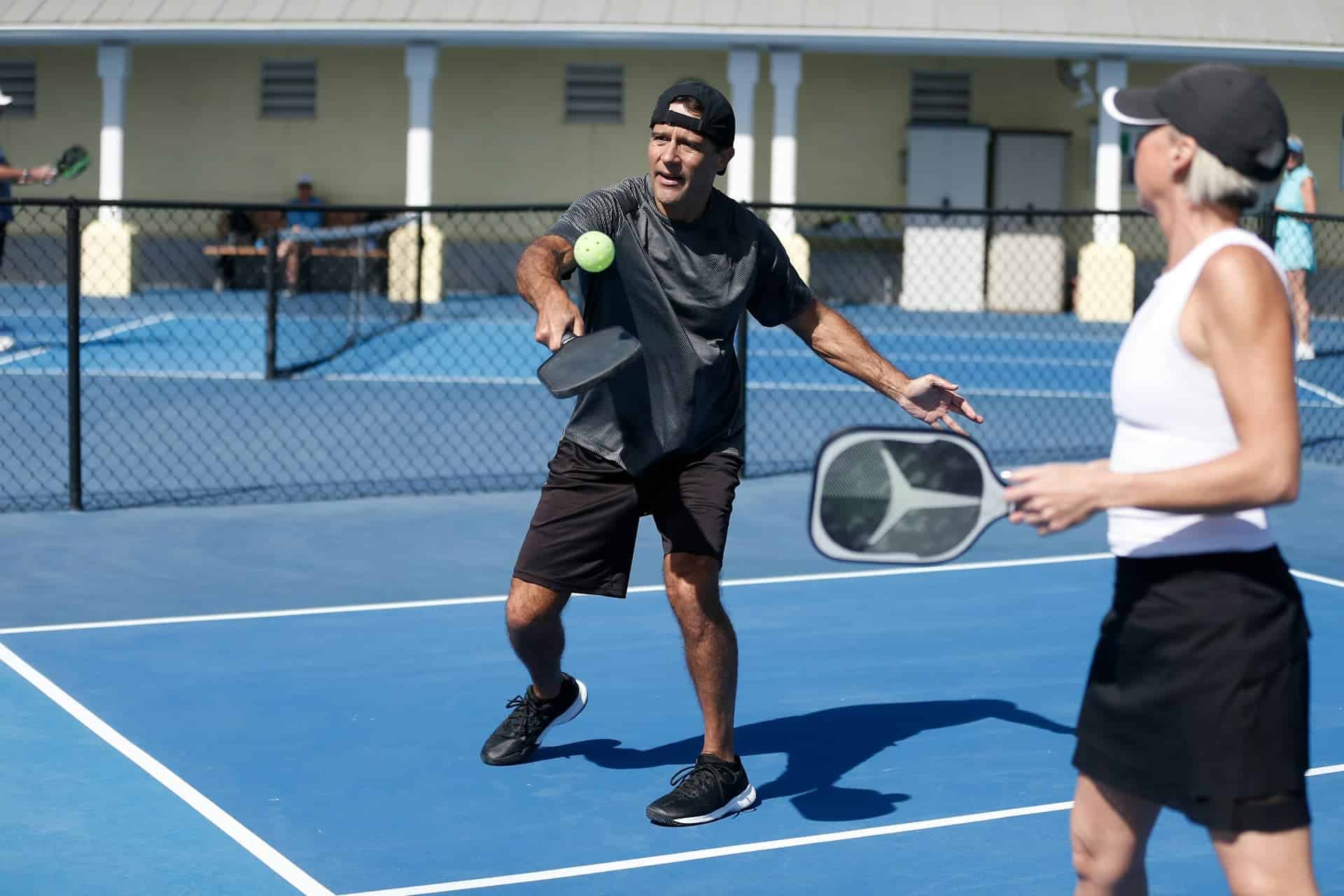
Pickleball has become America’s fastest-growing sport for the fourth consecutive year, with nearly 20 million players across the United States. Here in Jacksonville, you can’t drive through Nocatee or the Beaches without seeing courts packed with enthusiastic players. It’s easy to understand the appeal—the game is social, accessible, and provides excellent exercise without the high impact of tennis or other racquet sports.
But new research published in JAMA Ophthalmology reveals a troubling trend: as pickleball’s popularity has exploded, so have eye injuries. And the statistics are concerning.
The Numbers Tell a Sobering Story
Between 2005 and 2024, there were an estimated 3,112 pickleball-related eye injuries nationwide. While that might not sound dramatic at first, here’s what should get your attention: 88% of those injuries occurred in just the last three years. In 2024 alone, there were 1,262 documented cases.
According to the research, pickleball-related eye injuries increased by 405 cases per year from 2021 to 2024. This isn’t just a matter of more people playing—the rate of injuries is climbing faster than participation rates.
Who’s Most at Risk?
If you’re over 50 and love pickleball, pay close attention. The data shows that players aged 50 and older are 39% more likely to sustain eye injuries than younger players. About 70% of all pickleball eye injuries occur in this age group.
Women face particular vulnerability. Research shows they’re more susceptible to both wrist fractures and eye injuries, likely related to bone density changes and other age-related factors.
Interestingly, casual players—those who play less than eight times per year—appear to be at higher risk than regular players. Why? Limited experience, unfamiliarity with the game’s dynamics, and lower physical fitness all play a role.
The Science Behind the Danger
Here’s what makes pickleball uniquely risky for your eyes: that seemingly harmless wiffle ball can travel at speeds up to 40 miles per hour. Modern paddles, made with advanced materials like ethylene-vinyl acetate foam, can generate exit velocities approaching 60 mph.
When you’re positioned at the “kitchen line”—just 14 feet from your opponent—the ball takes only 350 to 400 milliseconds to reach you. That’s less time than it takes to blink.
Dr. Corey Lacher, lead author of the JAMA study and an ophthalmology resident at Rutgers, explained: “A lot of people think that just because it’s a wiffle ball that you’re not going to get hurt. But everything is very fast-paced in pickleball and you’re playing on a very small court.”
What Types of Injuries Are We Seeing?
The injuries documented in the research range from relatively minor to vision-threatening:
Most Common:
- Periocular lacerations (cuts around the eye): 35%
- Corneal abrasions (scratches on the eye’s surface): 16%
Severe Injuries:
- Hyphema (bleeding inside the eye): 5%
- Globe trauma (eye rupture): 3%
- Retinal detachment: 3%
- Orbital fractures (broken bones around the eye socket): 2%
Even “minor” injuries like posterior vitreous detachment can lead to retinal tears and potentially permanent vision loss if not properly treated.
How Do These Injuries Happen?
The research identified three primary mechanisms:
- Direct ball hits (43%): The most common cause, with an average patient age of 52.6 years
- Falls (28%): More common in older players, averaging 68.2 years
- Paddle strikes (12%): Typically affecting younger players, average age 30.5 years
Many injuries occur when both players rush to the net to return a ball, especially as they’re learning proper court positioning and technique.
The Prevention Gap
Here’s the most frustrating part: proper eye protection can reduce sports-related eye injuries by up to 90%. Yet there are currently no official standards for pickleball eye protection, and protective eyewear is not mandated for either casual or professional play.
In March 2024, USA Pickleball—the sport’s governing body—actually rejected a rule change that would have required eye protection in tournaments, citing enforcement challenges.
Dr. Jonathan Tsui, co-author of the study, emphasized: “We should educate our patients on the risks associated with pickleball in light of the risks associated with the nature of the sport, including rapid gameplay, swift projectiles and small court.”
What You Can Do to Play Safely
Invest in Proper Eye Protection
Look for protective eyewear with:
- Polycarbonate lenses (shatterproof)
- Wrap-around design for full coverage
- Compliance with American Society for Testing and Materials (ASTM) F3164 standard
- Proper fit that doesn’t interfere with play
Not all “sports glasses” offer adequate protection—make sure you get ones that are ANSI Z87.
Here is an example of glasses you can find on Amazon (non-affiliate link). Click me!
Dr. Mikals
References:
- Lacher CR, et al. Pickleball-Related Ocular Injuries Among Patients Presenting to Emergency Departments. JAMA Ophthalmology. 2025.
- Tsui JC, et al. Eye injuries from pickleball increasing every year. Healio Optometry News. October 2024.