
I get this question a lot from my patients. Some have done it, many others haven’t. So what’s the right answer? Well — it depends.
Everyone is different, and everyone’s risk for cancer is different. Unfortunately, there’s no simple yes or no, and that’s exactly why having a primary care doctor who really knows you makes all the difference.
What Is a Whole-Body MRI?
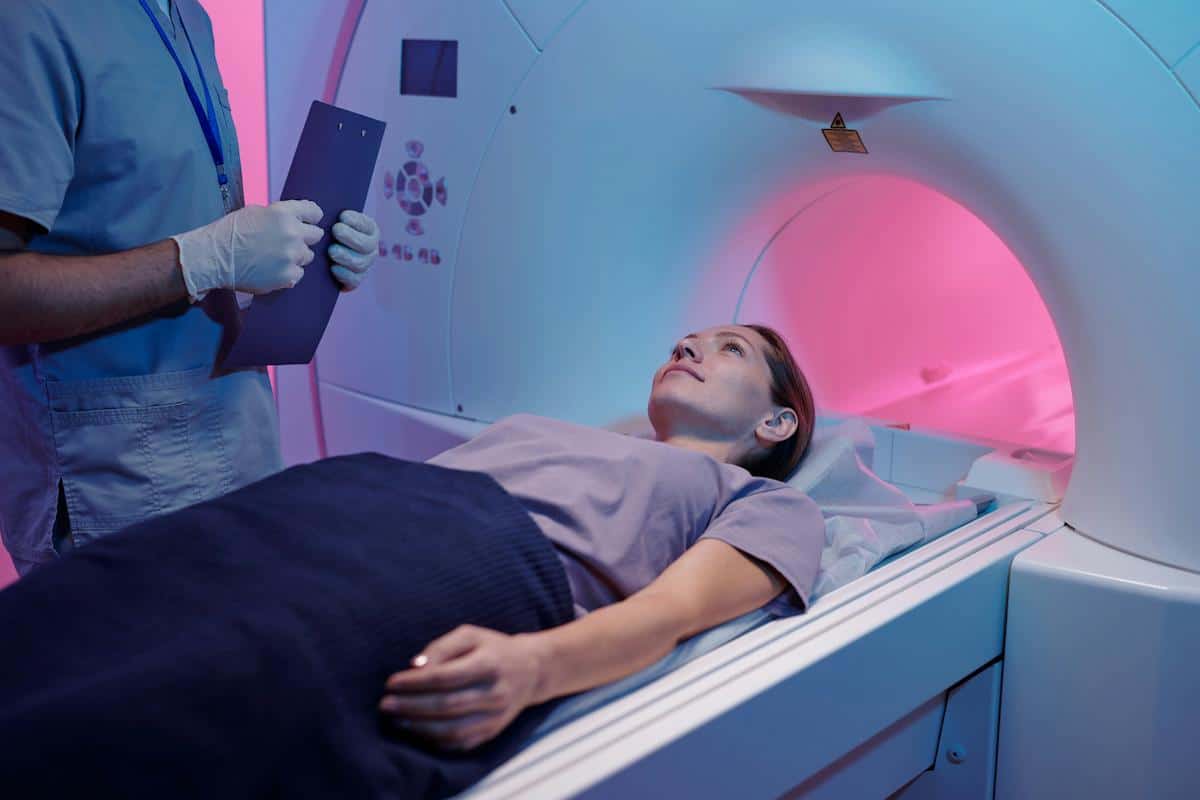
An MRI (Magnetic Resonance Imaging) machine uses powerful magnets and radio waves to take detailed pictures of the inside of your body — no radiation required, unlike a CT scan. A whole-body MRI does this from head to toe in a single session, usually lasting 45 minutes to over an hour.
The goal? Find problems — including cancer — before you ever notice a single symptom.
Does a Whole-Body MRI Detect All Cancers?
No — and this is one of the most important things to understand before deciding whether to get one.
Different cancers require different types of imaging. For example, detecting breast cancer requires a specialized breast coil, which is not part of a standard whole-body MRI. You can’t use one scan as a replacement for all the others.
What Cancers Does It Detect Well?
MRI is generally very good at finding:
- Multiple myeloma — a blood cancer that affects bones
- Advanced prostate cancer that has spread to other parts of the body
- Bone metastases — when cancer from elsewhere spreads to the bones
- Sarcomas — rare cancers of muscles and bones (including myxoid liposarcoma, bone sarcoma, and Ewing sarcoma)
- Lobular breast cancer — specifically for metastatic staging
- Solid organ tumors — such as kidney (renal cell carcinoma) and abdominal/pelvic sarcomas
- Brain and CNS tumors — when brain MRI is included in the protocol
- Lymphoma — for assessing cancer in lymph nodes and surrounding tissue
What Cancers Does It Miss?
Here’s the part the ads don’t always tell you. Whole-body MRI struggles to detect several common and serious cancers:
- Colorectal cancer — the inside of the colon isn’t well-seen without special preparation, and even then it takes a radiologist with specialized training
- Thyroid cancer — small nodules are often below what the scan can pick up
- Breast cancer — a dedicated breast coil and contrast dye are needed; a standard whole-body MRI is simply not enough
- Leukemia — blood cancers generally don’t show up on any imaging test
- Skin cancers and melanoma — these are diagnosed by looking at the skin, not scanning it
- Early-stage lung cancer — a regular CT scan is far better at catching small lung nodules
- Stomach and esophageal cancers — surface-level lesions inside the digestive tract don’t show well
- Pancreatic cancer — requires a specialized type of MRI not typically done in a whole-body scan
The Downsides You Should Know About
The False Alarm Problem
Research has found that about 1 in 3 people who get a whole-body MRI are told they have something “concerning” or “uncertain” — even though most of those findings turn out to be completely harmless.
I see a version of this happen all the time when patients go to the Emergency Room and get a CT scan of their abdomen. The ER doc is looking for one thing, but then the radiologist spots a kidney cyst — something the patient may have had their whole life and would never have caused a problem. Now that patient needs follow-up imaging for years, along with added stress and worry about something that may never have needed attention at all.
The “Who’s Reading It” Problem
When doctors order imaging, we typically send a specific clinical question for the radiologist to focus on. That focus matters. When a radiologist is scanning the entire body for everything at once, it becomes harder to catch small or subtle findings. It doesn’t happen often, but missing something is more possible when attention is spread across dozens of organs simultaneously.
Exciting New Advances in Cancer Screening
The good news is that science is moving fast in this space.
One newer option is a blood test called Galleri, which looks for cancer DNA circulating in your bloodstream and screens for quite a few different cancer types at once. The catch? It’s not great at catching Stage 1 and 2 cancers — which is exactly the stage you want to catch it, when treatment options are best and cure is most likely. It performs better for later-stage cancers, when things are already harder to treat. That said, the company has submitted Galleri for FDA approval, and it may be covered at least partially by insurance in the near future, which is promising.
Another exciting development is a new blood test for pancreatic cancer — one of the hardest cancers to detect early. The early sensitivity data looks encouraging, and it could become a valuable tool within the next year or two. We’re still waiting for more data before drawing strong conclusions, but it’s worth watching.
The Bottom Line
Whole-body MRI and new blood-based cancer tests are valid add-on options for people who have the means to pursue them and want extra peace of mind. But these are not replacements for your colonoscopy, mammogram, or other standard screenings that are proven, guideline-recommended, and in many cases covered by insurance.
These tests are far from perfect. They don’t rule out cancer. And they can’t be done just once — they need to be repeated every year or so to be meaningful.
The best cancer screening plan isn’t the flashiest or most expensive one. It’s the one tailored specifically to you — your age, your family history, your lifestyle, and your personal risk factors. Also, listen to your body when something is wrong and see your doctor in a timely manner. That’s the kind of conversation we have every day at Jacksonville Concierge Medicine.
If you have questions about what cancer screening makes sense for you, we’d love to help.
References
- Martins da Fonseca J, et al. European Radiology. 2026.
- Cochran T, et al. Journal of Pediatric Hematology/Oncology. 2023.
- Sodde P, et al. Journal of Medical Genetics. 2025.
- Maoz A, et al. Journal of Clinical Oncology. 2025.
- Li B, et al. European Journal of Radiology. 2014.
- Lecouvet FE, et al. Skeletal Radiology. 2024.
- Ahlawat S, et al. AJR American Journal of Roentgenology. 2023.
- Buus TW, et al. European Radiology. 2021.
- Ali M, et al. European Journal of Cancer Prevention. 2026.
- Raz DJ, et al. Cancer. 2025.
- Lecouvet FE. Radiology. 2016.
- Basar Y, et al. European Journal of Radiology. 2021.
- Kwee RM, Kwee TC. Journal of Magnetic Resonance Imaging. 2019.
- Dai KZ, et al. Journal of Magnetic Resonance Imaging. 2026.
- National Comprehensive Cancer Network. Updated February 2026.


